

How often do we let a first impression determine what we think about someone?
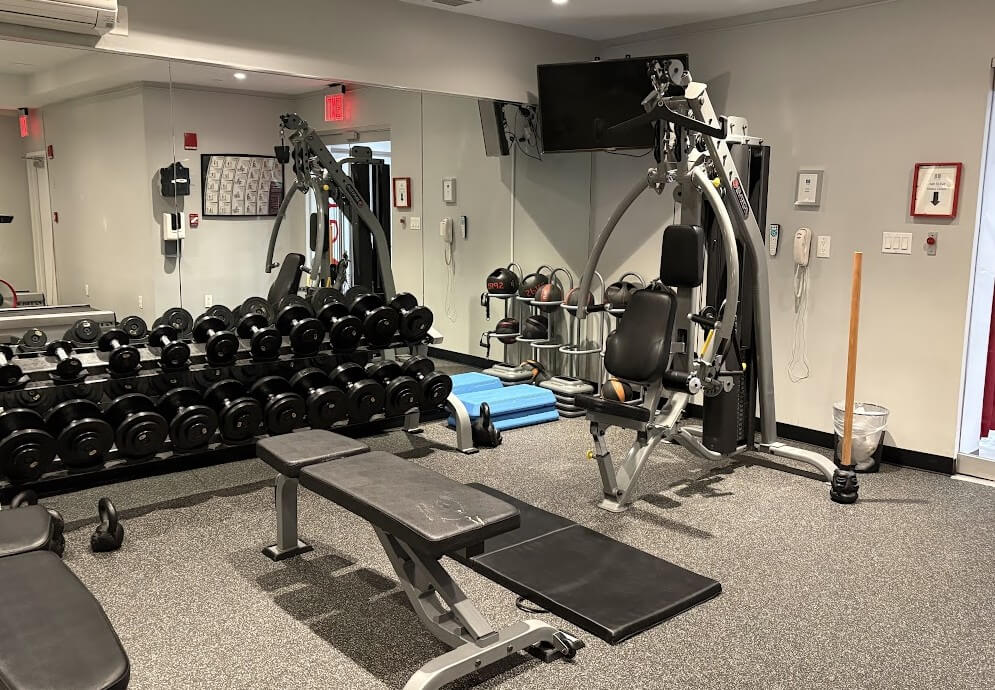
As I walked into the hotel fitness center, I heard someone talking. I turned the corner and noticed a woman on the stationary bike in a phone conversation. I hopped on the elliptical, put in my earbuds, and started my workout.
I could clearly hear her over the show I was watching. She was sharing what I would consider deeply personal details about a loved one in distress.
My internal commentary kicked in.
Who has a private conversation like that in a public place?
Does she realize others can’t hear their own devices over her voice?
Does she not care about the impact she’s having on the people around her?
I tried to focus on my workout. About 30 minutes later, she ended the call and rolled out a yoga mat.
When I finished on the elliptical, I approached the weight machine and realized that her mat was blocking access to it.
Should I say something this time?
Given what I’d already observed, how would she respond?
I quietly said, “Excuse me.” She didn’t respond. I hesitated, then said it again.
She looked up in surprise, took out her earbuds, and immediately apologized for not hearing me: “Sorry; I never hear with these things in.” When I asked if she would mind scooting over so that I could access the machine, she popped up immediately.
“Of course,” she said, smiling as she moved to another spot. I thanked her warmly, and we chatted for a minute.
As I lifted the weights, I realized how quickly I had jumped to conclusions about her awareness, her attitude, and how she would respond. I had braced for defensiveness. Instead, she was kind, flexible, and responsive. I walked away with a very different impression than the one I’d formed in my head.
This happens at work all the time.
We observe a single moment and allow it to define a whole person—without understanding their intent or the full context. Rather than checking our assumptions, we let them solidify. We avoid the person, talk about them with others, and build a story that may not be true.
We always have a choice: to stay in our stories or to be curious and engage the human in front of us. The outcomes are often very different, as are the cultures we shape.
The next morning, I entered the fitness room again. She was on the bike and on a phone call. She looked up, smiled, waved, and wished me good morning. I smiled back and waved.
Within 2 minutes, she wrapped up the call. And then we settled into our workouts, each with our own sounds. As she left, she waved again and said, “See you tomorrow morning!”