

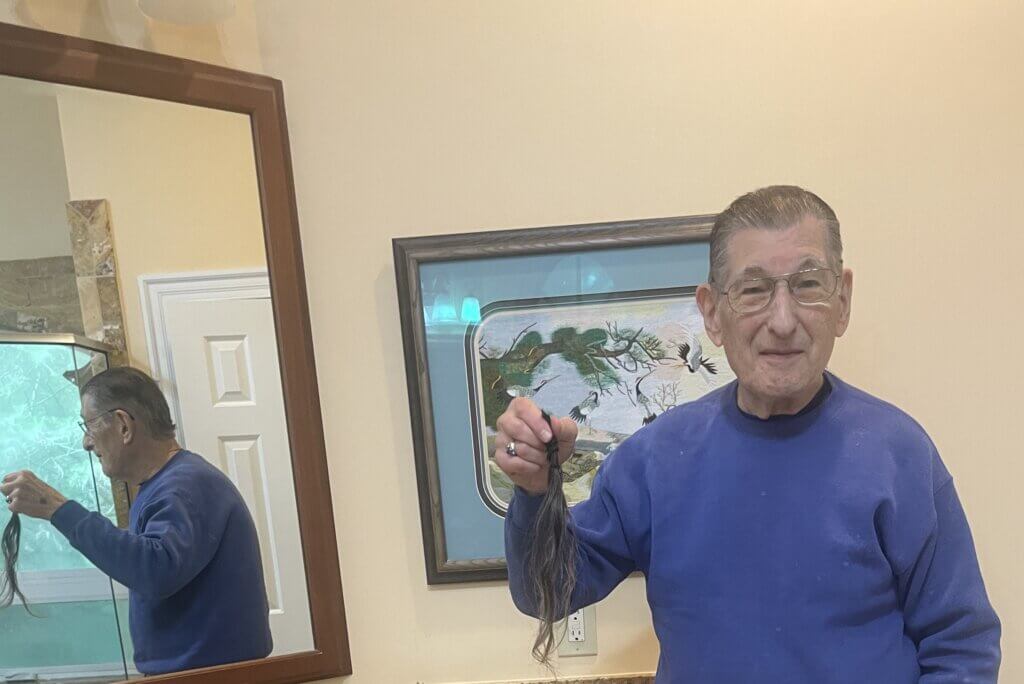
My dad recently cut off his ponytail, and I found out about it on Facebook.
Let me back up.
My dad was a military man and looked the part (clean-cut, precise, put together) for most of my life. Then, during the pandemic, when hair salons closed, he let his hair grow. At first, it made us laugh; we were surprised and a little amused that he (of all people!) would sport a ponytail. But after a while, it suited him—the retired, relaxed, affable “Pops” to our kids. Five years later, it was just part of who he was.
So when I saw the post and photo online, I felt unsettled, and if I’m honest, a little sad. What happened? Why would he cut it? How would that change the status quo?
I immediately picked up the phone, told him how surprised I was, and asked him why he cut it. He explained calmly: the ponytail was hard to care for, it got in his mouth at night, it felt messy, and he was simply ready for a change.
As I listened, I caught myself. I had made his choice about me. I had reacted to his change through my own lens—and in doing so, I put him on the defensive for a decision that was entirely his.
In the moment, I backpedaled and offered understanding instead. And over the next few days, I thought about why I had reacted so strongly. Maybe I had connected his easygoing, retired presence to that ponytail. Maybe I was craving steadiness when so much in the world felt uncertain. Regardless of the reason, for a brief moment, I forgot to consider his perspective and autonomy.
I could take this story in many directions: the importance of pausing before reacting, respecting others’ choices, reminding ourselves to show up with curiosity, navigating our current uncertainty, or owning our missteps. Instead, I’ll leave it here—with gratitude to my dad, a recognition of my own imperfections, and a reminder that sometimes, a haircut is just a haircut.