

She had stepped in it. Again.
In a recent coaching session, a client shared that she had reacted to someone’s behavior with anger.
Over time, she had learned how to manage disagreements with coworkers. This time, the other person was her parent. And she wanted to understand why the tools she had developed disappeared the moment she walked through the door to her childhood home.
It’s a great question. And she’s far from alone.
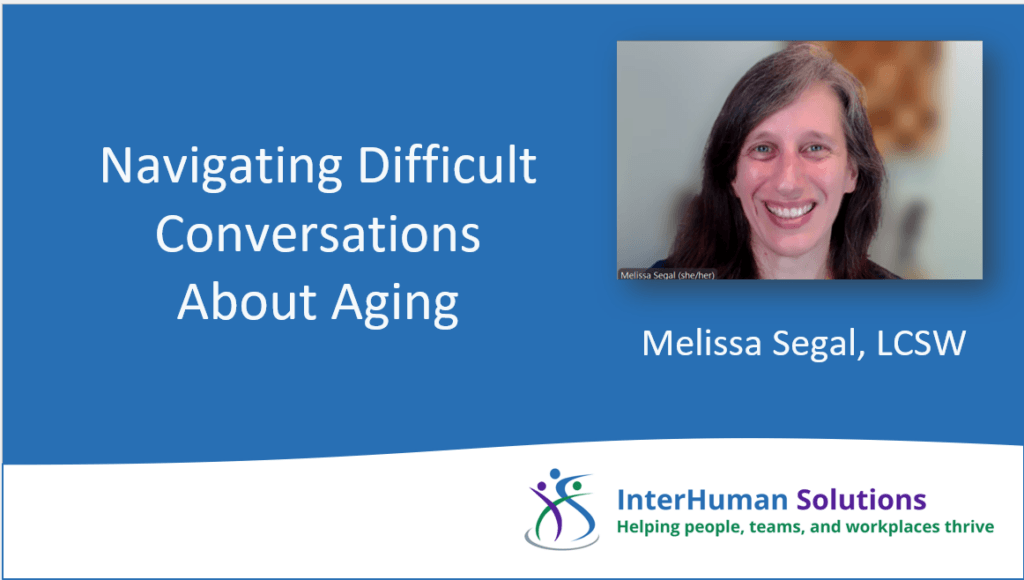
Last week, I facilitated a webinar on “Navigating Difficult Conversations about Aging” for the NC chapter of the National Association of Social Workers. Over 300 people attended, and what struck me was that more than half weren’t just there for their clients. They were also there for themselves.
We explored both how to have these conversations and why they feel so much harder with family.
Two things stood out as especially different from workplace conversations.
The weight of history. Family conversations carry decades of dynamics, roles, patterns, and unresolved friction. The sibling who always wanted to make the decisions. The child who never felt heard. The spouse who didn’t speak up. That history shapes how we show up at the kitchen table, how every word lands, and how we interpret each moment.
The particular challenges of aging. These conversations unearth what many of us try hard to avoid: loss of autonomy, physical decline, mortality, identity, and anticipatory grief. That’s a lot to hold, and even the most skilled communicators can find themselves flooded in ways they don’t expect.
So what helps?
Many of the same tools that work professionally also apply here:
Focus on connection before content. We often rush into these conversations because they feel urgent. Yet even with family, the relationship has to come first. We need to build trust and emotional safety before diving into the hard stuff.
Attend to emotions. Name and make space for the feelings in the room. Conversations about aging often touch on core identity, and sharp reactions can hint at something more significant below the surface.
Acknowledge the layers. Be aware of the family history, patterns, and complexity. Understanding and sometimes naming those reactions can help you respond to what’s actually happening instead of reacting to historical patterns.
Stay curious. Even when you are certain you are right, others may feel just as sure of their own answers. Ask genuine questions. Seek to understand before trying to be heard. The goal isn’t to win; it’s to navigate the conversation together.
Take a pause when you need one. Emotions may run high. Take time to slow down: step back, breathe, process, and re-center.
These family conversations are hard. Yet, we can bring the same intentionality and skill we strive to develop at work—and layer in a little extra grace for ourselves and the people we love. The tools don’t disappear. Sometimes we just need a reminder to bring them home with us.