

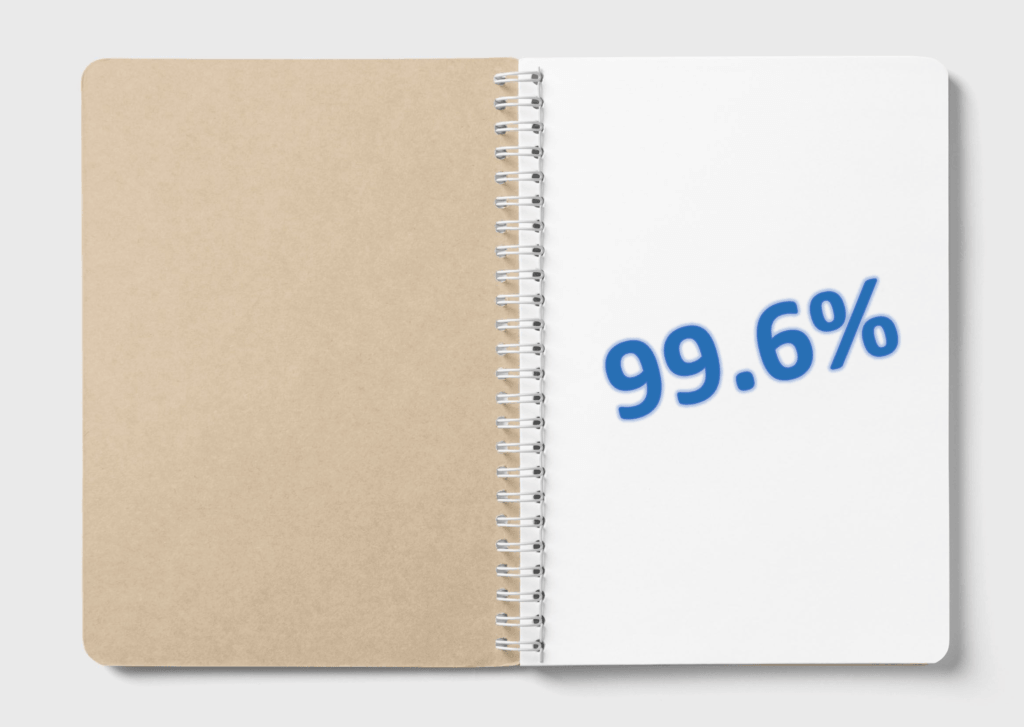
I just received my first report card in over 30 years.
It was an evaluation of a conference workshop I facilitated with 300 attendees.
I noted the scores at the top. 99.6% of attendees said they would recommend me as a presenter. 0.4% (likely one person) answered “no” to that question.
I immediately wondered about the 0.4%. What did I do to earn that response? Was I not engaging enough? Should I have provided more information or examples?
And then I flashed back to high school. When I earned 98% on a test, I always focused on what happened to the other 2%.
I skimmed the 140 comments below.
“Wonderful, knowledgeable presenter. Best session by far I have had.”
“Melissa did a great job… Only wish we had more time with her.”
“The kindness, compassion, and respect expressed in the session were unmistakable.”
The comments continued for nine pages. I teared up a bit.
Towards the bottom, I found a few that provided less favorable feedback. One person said they already knew everything I taught, and another said I should have talked slower and covered less material given the time allotted.
I considered those two comments and thought about what I might have done differently. Then I scrolled back to the top and stared at the 0.4%.
I paused, realizing what I was doing. I took a deep breath.
Our brains are trained to recognize threats—to notice and respond to the one tiger in an otherwise friendly forest. That wiring helps us stay safe—and may also cause us to fixate on negative information.
At times, we may question our abilities, even when we have data that supports our competence. Those feelings are common, especially as we take on new challenges or when our work is being evaluated.
We may also strive for perfection in our work, even if we know it’s unattainable. We may concentrate on what we missed or what we could have done better.
Even though I facilitate workshops on navigating emotions, imposter phenomenon, and perfectionism, there I was.
I took another deep breath and read the comments more carefully. I intentionally noted that 140 people took time to write overwhelmingly positive notes.
I copied my favorite comments into a sticky note on my computer, and I periodically scan them.
I remind myself that 299 “yes” votes weigh much more than one “no”. While I want to learn from that one, I also need to value the rest.
If you are that one attendee out of 300, I’d love to buy you a cup of coffee and hear your perspective. I’d like to understand what I could have done better. After all, I’m still wondering what happened to that 0.4%.